William Chester Minor begins contributing to the OED
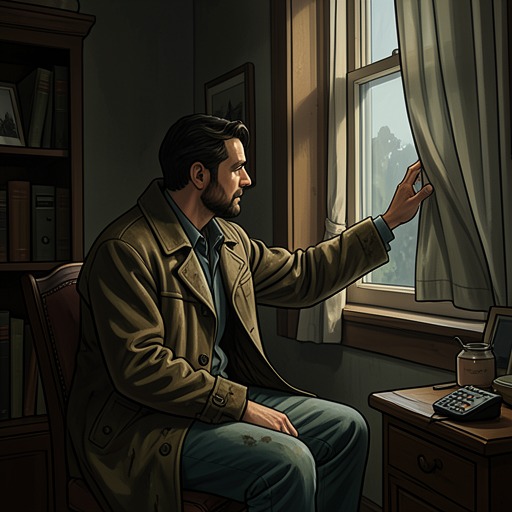
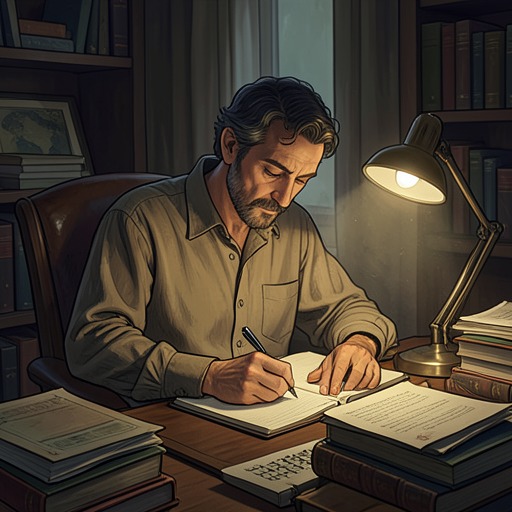
The Surgeon of CrowthorneWilliam Chester Minor begins contributing to the OED not with a public appointment or a meeting with its editor, but with a request for evidence about a single troublesome word. His response to the inquiry about art showed that a reader working at Broadmoor Asylum could become a remarkably productive resource for James Murray’s Dictionary team. The first known quotation of his in the finished book came from Sir Joshua Reynolds; the work that began around that word grew into a sustained scholarly partnership, conducted largely through letters and quotation slips.
From volunteer offer to a direct request
The practical circumstances of Minor’s contribution emerged from the needs of a project whose staff could not always find the quotations they required. Before his arrival as a correspondent, Murray’s assistants had to search their shelves, pigeonholes, and accumulated slips for evidence of a word’s history. Minor’s first letter said what he had done and that he was ready for further inquiry. That offer suggested a more direct method: when a word presented a problem, the Dictionary staff could send him the word and ask him to investigate it. In time, they might receive a letter identifying the relevant passages and a package of slips ready to be used in the Dictionary’s production.
The change was practical as well as personal. Rather than hoping that useful examples happened to be present among the thousands of existing slips, the editors could direct a request to a reader willing to pursue a particular question. Minor’s contribution was therefore not simply the delivery of material he had already collected. It helped establish a working arrangement in which the Dictionary’s editorial needs could prompt targeted research from a distance.
The test of art
The first word tried under this arrangement was art, a noun intended for the second fascicle, which was being prepared for publication in the late summer of 1885. An assistant, or possibly Murray himself, sent the request to Minor at Broadmoor. The question was whether he had marked quotations that indicated meanings not yet represented, or examples earlier than those already assembled. The editors had identified sixteen distinct shades of meaning for the noun and wanted to know whether Minor could add evidence or clarify the record.
The word had already proved unusually difficult to arrange. Its quotations had been divided into groups and provisionally assigned definitions, but the fragments did not immediately form a coherent sequence of changing meanings. Murray described the editorial task as repeatedly shifting the evidence into a possible chain of development; art had resisted the attempt, and material already set in type had to be pulled apart and reconstructed across several columns. The request to Minor arose from that specific impasse. It was a test of whether an outside reader could contribute not merely more examples, but evidence useful to a disputed editorial problem.
Eighteen readers responded after an appeal in the Athenaeum. Most sent only a sentence or two. Minor enclosed twenty-seven quotations, making his reply conspicuous for both its scale and its apparent precision. The Dictionary workers recognized in it a meticulous, prolific reader with substantial reserves of research. Many of his examples for art came from Reynolds’s Discourses, first written in 1769. Their common source did not diminish their value: the quotations gave the editors material for the entry at the point when they were trying to establish its meanings and historical development.
The first known quotation in print
One of Minor’s quotations entered the completed Dictionary under the sense The Arts. It cited Reynolds’s 1769 Discourses, in the 1870 edition of his Works, and recorded the observation that members of the nobility wished to be distinguished as lovers and judges of the arts. The passage stands as the first known quotation Minor placed in the finished book. Its modest appearance in an entry preserves the concrete beginning of a contribution whose later scale could otherwise obscure its first step.
The quotation also shows how the Dictionary made individual historical examples serve a larger editorial purpose. Minor supplied evidence tied to a dated source; the editors placed it within a defined sense of the noun and its sequence of attestations. The result was not simply a record of his reading, but a small component in the Dictionary’s effort to represent the history of English through documented usage. For Minor, the Reynolds passage became the initial published trace of work that continued for years.
From one answer to a working partnership
After the art inquiry, Minor sent quotations at a prodigious rate, sometimes more than a hundred new slips in a week and as many as twenty in a day. His handwriting was neat and firm. His letters to Murray remained formal, and he rarely strayed beyond the research he had taken upon himself. A surviving letter from October 1886 concerns agricultural vocabulary and discusses a book on farming, as well as words connected with hops, blight, blast, and the processing of flax. This range shows how the collaboration extended beyond the first difficult noun: Minor searched across historical sources for the dated uses that could illuminate many kinds of words.
The beginning of the work also needs to be distinguished from the later story of the men’s first meeting. A popular account invented by Hayden Church presented a dramatic discovery at Broadmoor, but the book identifies that scene as fiction. In a letter written in 1902, Murray recalled that his first contact with Minor had come probably in 1880 or 1881, when he understood him to be a retired medical man with time to read. Murray later learned that the address at Broadmoor belonged to an asylum and initially supposed Minor might be its medical officer. The personal meeting took place in January 1891, after Murray had sought permission from Dr Nicholson to visit. The correction matters to the history of the contribution: the work and correspondence preceded the famous meeting, rather than beginning with it.
That visit initiated a period in which the two men met regularly for almost twenty years, but their connection had already been formed through the Dictionary. Their shared attention to words made a sustained relationship possible across the distance between Oxford and Broadmoor. Minor’s first response to the request about art thus marks more than an isolated success: it revealed the value of directed volunteer research, put his scholarship into the printed Dictionary, and began a long association whose personal dimensions developed after its working foundations were in place.